




Since its outbreak in February 2022, the Russia-Ukraine war has served as the world’s premier testing ground for 21st-century Unmanned Aerial Vehicle (UAV) technology. This conflict has not only validated the effectiveness of unmanned platforms in large-scale conventional warfare but has also accelerated tactical innovation and technological iteration at an unprecedented pace. This article provides an in-depth analysis of the scale of drone deployment in the Russo-Ukrainian theater and explores the fundamental changes it heralds for the future of military strategy.
I. The Conflict in Ukraine: Data and Facts of Scaled Drone Operations
1.1 Unprecedented Scale: From Tool to Infrastructure
Both sides have deployed a cumulative total of over 100,000 drones of various types, with daily attrition rates reaching hundreds of units. This signifies that drones have evolved from special operations tools into essential infrastructure for maintaining battlefield situational awareness and strike capabilities.
- Ukraine: Its “drone army” has surged from fewer than 100 units before the war to tens of thousands, establishing a reconnaissance-strike network covering the entire front.
- Russia: Moscow has established domestic production lines for the “Geran-2” (a derivative of the Iranian Shahed-136), achieving a monthly output exceeding 2,000 units, enabling assembly-line production of one-way attack drones for long-range saturation strikes.
1.2 Tactical Innovation: From Support Asset to Core Capability
- Reconnaissance Revolution: Commercial multi-rotor drones like the DJI Mavic 3 have become standard issue at the company and platoon levels, compressing the frontline intelligence cycle from hours to minutes.
- Precision Strike Chain: Ukrainian “Leleka-100” reconnaissance drones, integrated with US-made “Switchblade” loitering munitions, enable a “find-and-kill” loop against high-value Russian targets such as command posts and ammunition depots.
- Electromagnetic Spectrum Warfare: Both sides are engaged in intense spectrum contestation. Russian “Leer-3” electronic warfare systems can effectively jam drone control signals within a specific radius.
Case Study: During the 2023 Crimean Bridge attack, Ukrainian forces successfully utilized modified maritime drones carrying high explosives to breach multiple layers of Russian defense. This incident demonstrated the expanding cross-domain operational capability of unmanned systems extending from air to sea.
II. Technological Fission: Four Pillars Changing the Rules of War
2.1 Cost Disruption: The New Paradigm of Asymmetric Attrition
The introduction of drone technology has fundamentally altered traditional cost-benefit calculations. The following table illustrates a typical cost comparison:
| Equipment Type | Typical Cost (USD) | Target Value Ratio (Approx.) | Notes |
|---|---|---|---|
| Modified FPV Drone | $500 | 1 : 2000 | Lethal threat targeting tank roofs |
| “Lancet” Loitering Munition | $35,000 | 1 : 100 | High-precision kamikaze attack |
| Main Battle Tank (T-90) | $4,000,000 | — | Forced to add roof cages (“cope cages”) |
This cost inversion has forced traditional armored forces to alter deployment and defense strategies, as the advantage of heavy armor is being eroded by cheap yet effective drones.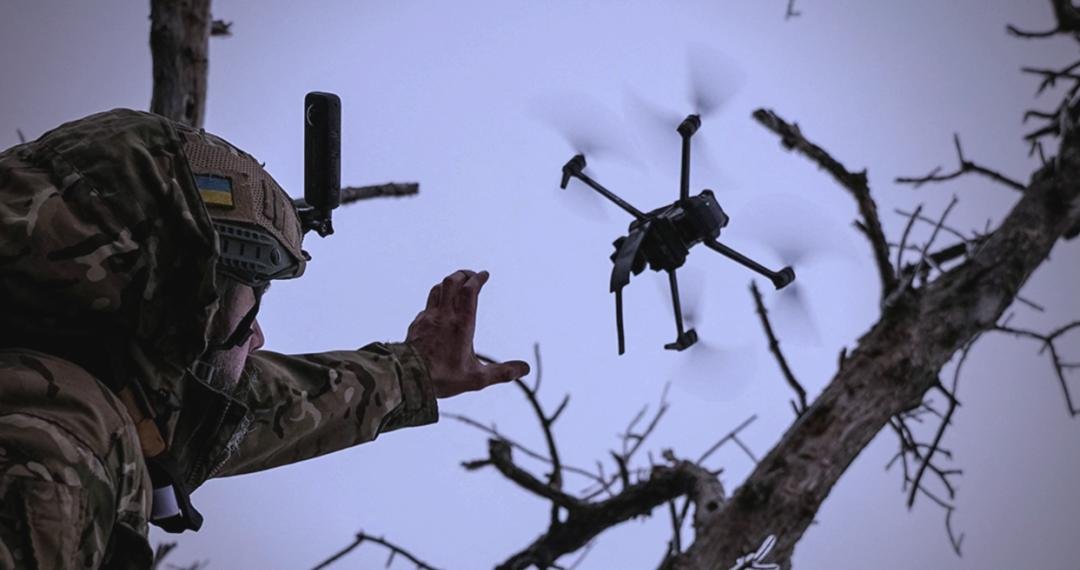
2.2 AI Empowerment: From Remote Control to Autonomous Hunting
Artificial Intelligence is increasingly integrated into drone systems. For instance, the Russian “Lancet-3M” has demonstrated automatic target recognition and tracking capabilities, distinguishing between military vehicles and civilian infrastructure via neural networks. Ukraine’s “Saker Scout” system features autonomous patrol route planning and automatic frequency hopping in jammed environments.
2.3 Swarm Tactics: Overwhelming Numbers vs. Quality
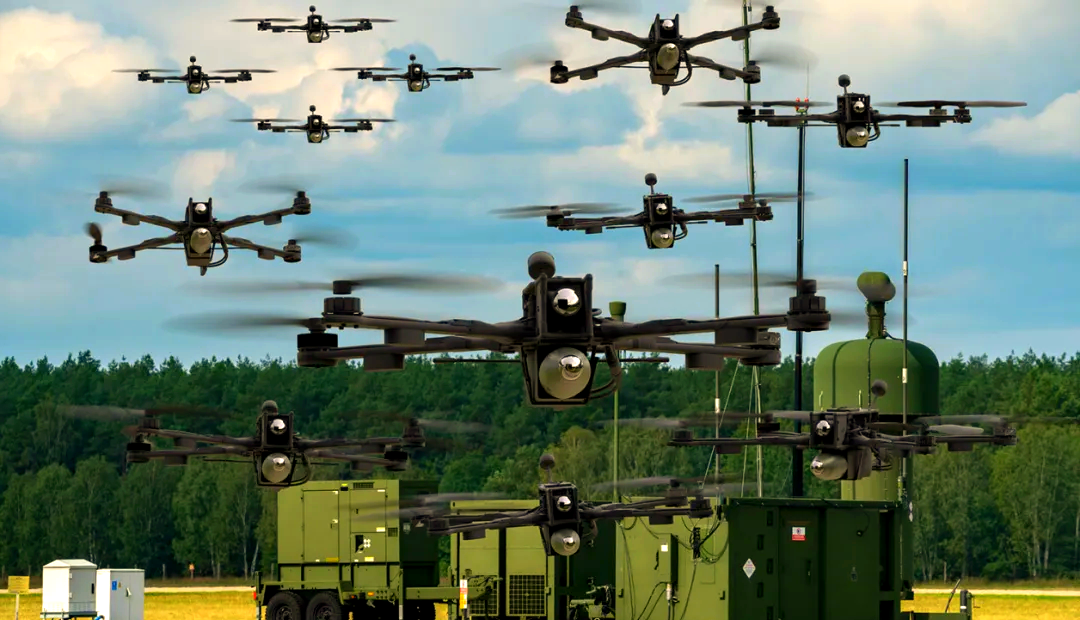
In early 2024, Russia launched a coordinated strike involving 83 “Geran-2” drones, causing Ukrainian air defense interception rates to drop significantly to approximately 65%. This tactic exploits the high cost of defensive missiles, aiming to exhaust the adversary’s resources through sheer numbers.
2.4 Proliferation: Blurring Lines Between Civilian and Military
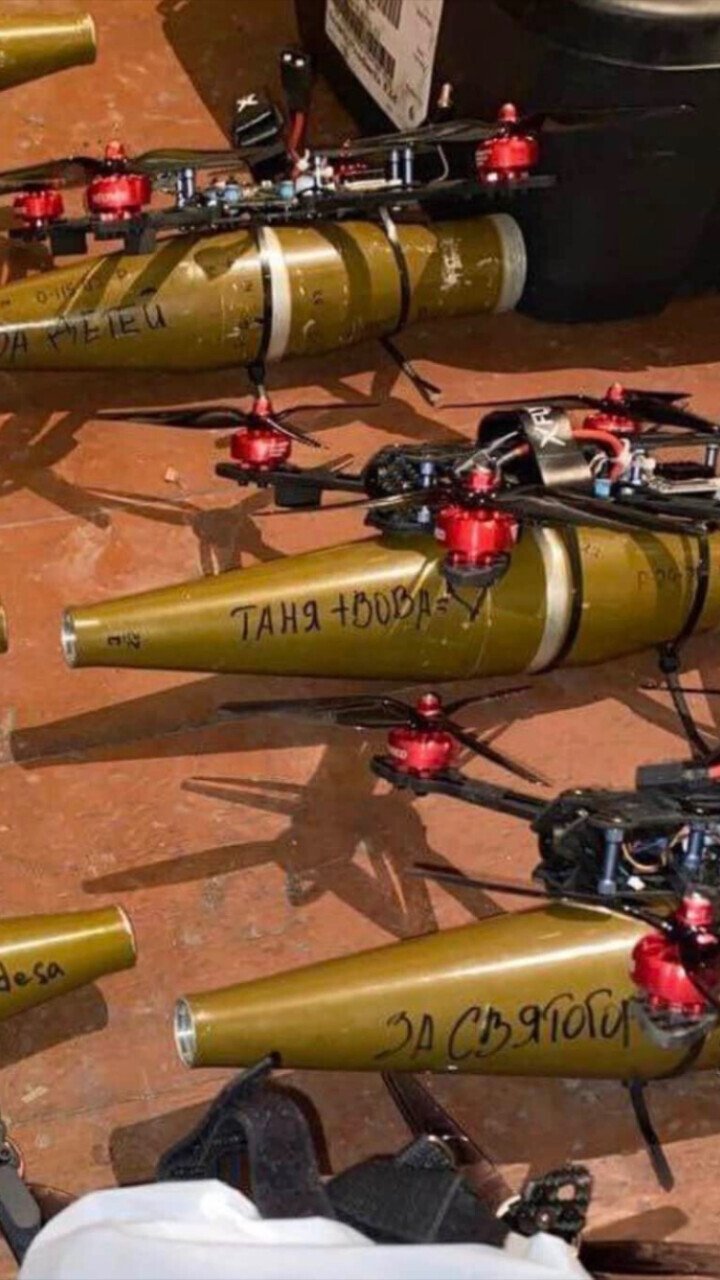
Widely available 3D-printed bomb-release mechanisms and commercial drones priced at a few hundred dollars on platforms like Alibaba have drastically lowered the barrier for non-state actors to acquire precision strike capabilities.
III. Future Warfare: Five Dimensions Reshaped by Drones
3.1 Reorganization of Force Structure
- Dedicated UAV Units: The U.S. Army has formed “Drone Companies” equipped with over a hundred UAVs; Ukraine plans to establish independent Drone Combat Brigades by 2025.
- Manned-Unmanned Teaming (MUM-T): Nations like Israel are operationalizing concepts where a single manned aircraft commands multiple “loyal wingman” drones.
3.2 Challenges to Air Defense Architecture
Traditional air defense systems face a trilemma: Difficult to Detect (small Radar Cross Section/RCS), Difficult to Track (weak Doppler signature of Low Slow Small targets/LSS), and Difficult to Intercept (economic unsustainability of using expensive missiles against cheap drones).
3.3 Ethical and Legal Dilemmas
The “algorithmic black box” of Lethal Autonomous Weapons Systems (LAWS) raises international concerns regarding accountability. UN reports have cited potential cases in Libya where AI drones may have selected and attacked targets without human intervention, highlighting a regulatory vacuum.
3.4 Lowering the Threshold of War
Attacks by Houthi forces on Saudi oil facilities using modified commercial drones demonstrate that non-state actors now possess strategic strike capabilities once exclusive to regular air forces.
3.5 Formation of the Joint All-Domain Operation Cloud
The U.S. Air Force’s Advanced Battle Management System (ABMS) aims to link satellite data directly to frontline drones, reducing target information latency to seconds. This Air-Land-Sea-Space integration will break traditional service boundaries, realizing true Joint All-Domain Command and Control (JADC2).
Conclusion
The Russia-Ukraine war is not merely a geopolitical conflict; it is a military technology accelerator. The mass deployment of drones proves their decisive role in modern warfare while exposing the vulnerabilities of traditional force structures. With advancements in AI, swarm technology, and materials science, future battlefields will rely less on massed armor and more on algorithmic efficiency, data processing power, and the autonomy of unmanned platforms. Military forces worldwide must re-evaluate their doctrines and equipment development paths to adapt to this irreversible shift.
Frequently Asked Questions (FAQ)
Q1: Which drone has been most representative in the Russia-Ukraine war?
A: The Russian “Lancet” series of loitering munitions and the Iranian-designed “Shahed-136” (Geran-2) stand out due to their mass production and long-range strike capabilities. Additionally, commercially modified FPV drones have played a massive tactical role on both sides.
Q2: Will drones completely replace manned fighter jets?
A: Complete replacement is unlikely in the short term, but the air combat paradigm is shifting. The future likely involves “Loyal Wingman” concepts, where manned aircraft command drone swarms for high-risk missions, creating a layered capability mix.
Q3: How can nations defend against drone swarms?
A: Solutions include developing Directed Energy Weapons (DEW) like high-energy lasers and high-power microwaves, combined with advanced radio frequency monitoring/jamming technologies, and establishing low-cost, multi-layered interception nets.